

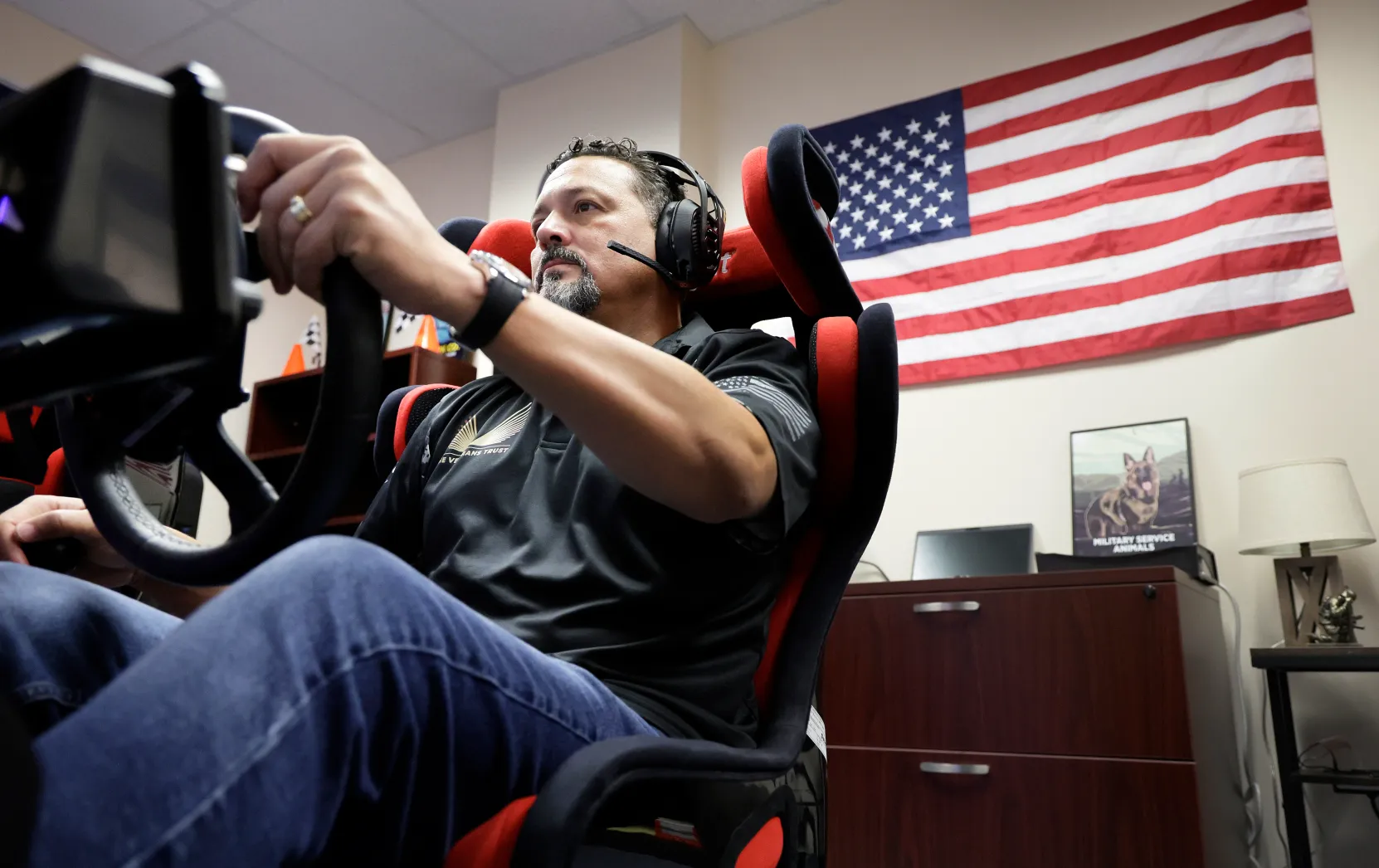
Race-car 'adrenaline therapy' helps veterans with PTSD
30 July 2026
CREDITS: Laurie Mermet | South Florida Sun Sentinel
Jose Agurto spent 15 years in the Marine Corps. He deployed to Iraq in 2003 for the U.S.-led invasion that overturned Saddam Hussein’s government, and later found himself in Japan during the 2011 tsunami, when a 9.0 magnitude earthquake killed nearly 20,000 people.
By the time he retired 11 years ago as a gunnery sergeant, the Nicaragua native had seen a lot.
What he couldn’t do, he said, was talk about it.
“You’re afraid to talk to a doctor because you’re afraid of what the consequences are going to be,” Agurto said. “I felt like I was in a box where I couldn’t express what was going on mentally with me because I didn’t want to lose my career and was wondering what the Marines were going to think of me. I was leading them — what example would I have been giving them?”
Mental health struggles have always been part of a stigma in military culture, a mindset that followed him into post-service life and deepened the PTSD he was already carrying. He tried cognitive therapy, medication and group sessions, but none of it stuck.
“It was like putting a Band-Aid on [an open wound],” he said.
It took him nine years to find something that worked: Race cars.
Agurto is one of 25 veterans who, over the past two years, have turned to a program that swaps a therapist’s couch for a racing simulator.
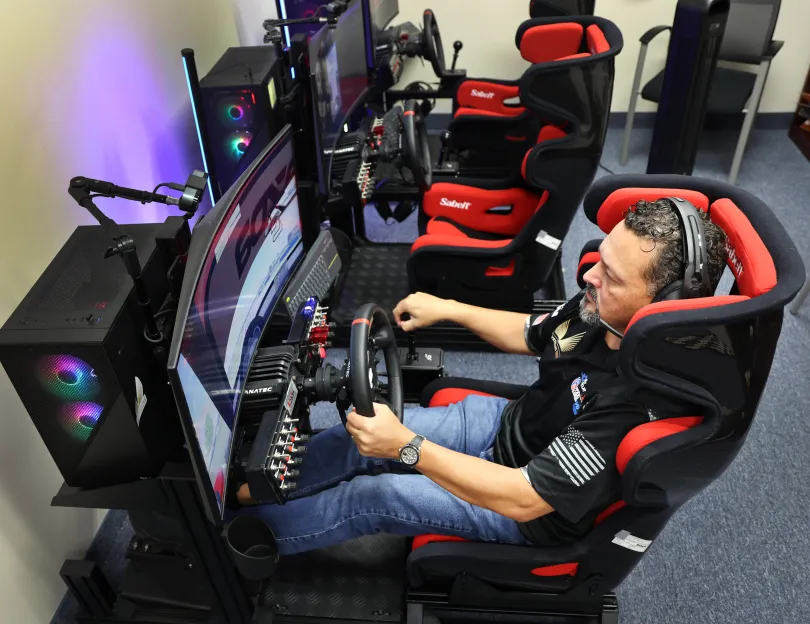
Agurto takes part in an adrenaline therapy research for veterans, where veterans turn to heartbeat-increasing activities such as racecar driving to help with their PTSD on Wednesday.
Conducted at Nova Southeastern University, the program uses motorsports to teach veterans how to manage stress. Participants can complete the program in one, two, or three-day formats, either over the course of a week or spread out over a schedule that works for them.
Tom Kennedy, the director of academic affairs for NSU’s College of Psychology and one of the researchers behind the program, compared the idea to a vaccine — but for stress rather than disease.
“You give somebody part of a dead virus to trigger their body’s reaction, and then you gain strength to be more able to handle the stressor,” Kennedy said. “Same idea, we increase the stress through a high-performance race-car simulator, and as we’re increasing it, we’re providing them the skills, inoculating them to be able to handle those things.”
The goal is to teach veterans to recognize the early signs of fight-or-flight and to calm themselves before they react.
Veterans face a higher risk of severe behavioral and mental health challenges due to combat trauma, according to the National Institute on Drug Abuse.
“While we’re increasing the stress level through these high-performance simulators, we’re providing them with the skills on how to deal with that stress and still perform well in hopes that it will generalize out to their regular lives,” Kennedy said. “So when [the veterans] are in stress with their boss, their spouse, their significant other, folks driving crazy in Miami, they won’t go into rage.”
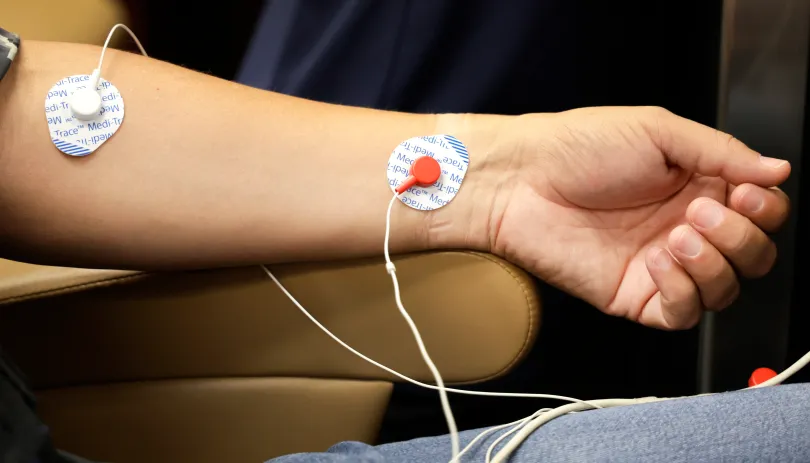
The program consists of three sessions a week, with veterans rotating through one of three racing simulators wired with sensors that track heart rate and breathing in real time, while instructors coach them through breathing techniques.
The wait list sits at 30 people.
The university is partnering with The Veterans Trust foundation, a Fort Lauderdale-based nonprofit that gives veterans, first responders and active service members a route into motorsports — and for many, a renewed sense of purpose.
The idea for this program grew out of conversations between the foundation and NSU after Veterans Trust leaders shared their experiences and pitched the idea. Stephen Kantarze, the foundation’s director of race camp operations and a veteran himself, came up with the program idea and was one of the first participants.
“When I went into the program, I was struggling with a lot of things in life and was learning how to use these techniques and implement them in my life. It really changed and helped me a lot,” Kantarze said.
Through this type of therapy, veterans get an outlet that mirrors the intensity and adrenaline rush of the battlefield, minus the danger.
“I’ve been to group therapy before, and it just never really clicked,” Kantarze said.
The lessons travel outside of the track or lab, including into South Florida traffic.
“There’s a lot of road rage in Miami, so you get to apply some of the skills you learn here and be able to control the anger that comes in,” Agurto said.
Agurto, now the lead ambassador for Veterans Trust, which connected him to NSU’s program, said one of the hardest parts of leaving the military was losing its structure.
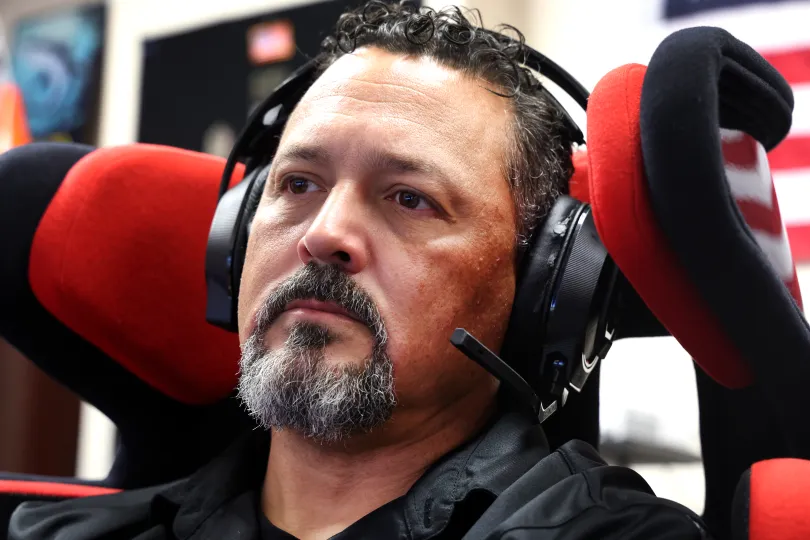
“Even if you’re in charge of the Marines, you still get delegated [tasks],” he said. “And when you get put out of that, then you don’t know what to do. It’s like a fish out of the water.”
Michael Garcia, an NSU doctoral student and one of the program’s coordinators who spent 14 years in the Coast Guard, agrees.
“I think life is harder than being in the military. The military feels like a bowling lane with bumpers,” Garcia said, noting that when the military’s structure is gone, many veterans struggle to find direction.
His time in the service wasn’t low stakes, and he said he wishes he’d had better ways to manage stress at the time.
“I was driving the boat into 20-foot seas trying to go save a sinking vessel, so it was a lot of high stress stuff too,” he said.
Other programs in the U.S. also bet on adrenaline as therapy, such as The Follow-On Mission, a nonprofit organization based in California, Mo., that offers similar services to combat veterans and first responders.
“It’s being able to reproduce the physiological effects of adrenaline that’s experienced in combat, but you’re doing it in an environment that’s free of the fear, the anger, the anxiety,” said Follow-On Mission board member Rebecca Jackson.
Jackson co-founded the organization in 2020 with her husband, a retired Special Forces Green Beret, after racing helped him cope with injuries that ended his career and left him, in her words, “in a pretty dark spot.”
“The change that I saw in him after his first stint in the car was borderline miraculous,” she said.
“It was the first time that I had seen him grin like that.”
As the NSU program grows, researchers hope it can become a model for other universities. Interested veterans, first responders and active service members can sign up for this program here.